

When boating on the river, it is crucial to remember the responsibility to give way to large container ships. These vessels have limited visibility from the bridge and reduced manoeuvrability, making it challenging for their captains to avoid smaller boats. If you cannot see the ship’s bridge, the captain likely cannot see you either.
To ensure safety:
- Always maintain a safe distance from large ships. Keep in mind the line-of-sight limitations and avoid areas where you may not be visible.
- Be aware of the closing speeds between your vessel and larger ships. These ships cannot stop or turn quickly.
- Stay vigilant and proactive in avoiding their paths to prevent dangerous situations.
Additionally, it is important for all boaters to keep a listening watch on channel 71 on the VHF. This allows you to stay informed of nearby traffic and communicate with other vessels or harbour authorities if needed.
Incident Report: Yacht Obstructing Large Container Ship
An incident occurred recently involving an outbound yacht that crossed the harbour and caused a significant obstruction to a large container ship. The container ship measured 364 meters in length, with a draft of 15.7 meters. The yacht did not have a VHF radio onboard, making it impossible for Vessel Traffic Services (VTS) to establish contact.
The tug and ship sounded five short and rapid blasts to signal the danger, but the yacht failed to alter its course. The container ship, travelling at a speed of 4-5 knots, was forced to reverse its engine. However, with a stopping distance of approximately one nautical mile, the ship took a large shear to port. This deviation was managed with the assistance of tugs and the ship’s bow thruster to maintain safe water. Despite these efforts, the yacht continued outbound without any course alteration.
A tripping pilot was conducting the ship’s pilotage under the supervision of a Senior Pilot, ensuring the situation remained under control. This incident highlights the critical need for smaller vessels to carry VHF radios, heed warnings, and respect the limitations of large ships.
By following these guidelines, you contribute to a safer river environment for everyone. Let’s work together to ensure that both recreational and commercial vessels can share the waterways responsibly and safely.
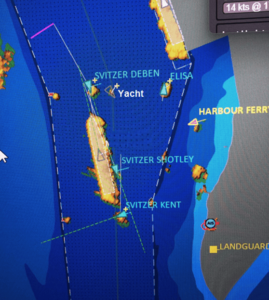
(Images and incident report in this article courtesy of HASA)
